
How Editing Works—And, Yes, it Does Work!
An editing "testimonial" by Jeanine Kitchel and her editor, Yours Truly

I recently read a Substack post that claimed to tell readers how to publish a book. Some of the info was spot on—like where she said that no matter if you publish on your own, with a team, or traditionally, it is going to be a lot of hard work. I certainly “second that emotion” as the song goes.
But deep in the post, where the author was listing the steps to self-publish a book, she said, and this is a direct quote: “Hire a book editor or use editing programs.” Or use editing programs? Is there really some sort of editing program will help you shape and craft your manuscript into a sale-able book? Can AI do that for you?
That spurred me to update the following post, originally written in 2018, when Jeanine’s newest book at the time, Wheels Up, was newly released. This is the first in a series of newsletters where authors I have worked with, often more than once, will explain what they think their books/writing gained from the process. Read on!
This post was written with my friend/client and fellow Substacker Jeanine Kitchel of the always-fascinating ‘stack Mexico Soul. Jeanine has written a couple of nonfiction books and is also the author of two “narco lit” crime novels, Wheels Up—A Novel of Drugs, Cartels and Survival (May 2018) and Tulum Takedown (2020), which I also edited; NOTE: all her ebooks are available for free right now on Kindle Unlimited.
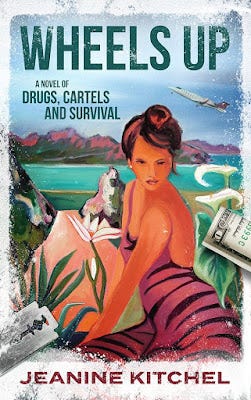
I’ll let Jeanine go first (she’s talking about “Wheels Up,” her first novel):
“For me, writing fiction did not come easy. With a background in journalism, my early attempts to create fiction contained lengthy back stories and copious blocks of information. That style may have worked several decades ago when Michener was king, but didn’t cut it now.
Early on I fell into my old habit of researching, my comfortable companion. My initial efforts burgeoned into a whopper of a book, well over 93,000 words. It had taken me years to write and re-write my beginning chapters. I knew something wasn’t quite right but couldn’t put my finger on it, nor could my writing group or my Beta readers.
Enter Jennifer Silva Redmond. Before I turned over the manuscript, she explained that her first edit, called a content edit, was when the editor basically checks out the bones of a writer’s work. When she got back to me, I was devastated by her initial advice—make huge cuts, especially at the beginning. I’d wanted someone to come in with a magic wand and divine where the structure of the story lay, and Jennifer did that. Little did I know that the cutting would be done by hatchet!
For two days, I sulked. After a sleepless night or two, I digested Jennifer’s suggestions—then went to work. I xeroxed her six pages of comments and that became my Bible. I started to cut, paste, and scrap text. It took me three weeks.
Jennifer suggested a second content edit. I happily complied. She came back to me with more suggested cuts, now using a scalpel. By this time I was getting the hang of it. Her edits helped me to streamline the book—made it punchier, edgier, a faster-moving story.
The final thrust came with the line edit, where Jennifer worked pockets of words into cleaner, more readable prose. I felt good—really good—about the finished product. It was down to under 73,000 words. We’d cut over 20,000 words. And I didn’t miss those words at all.”
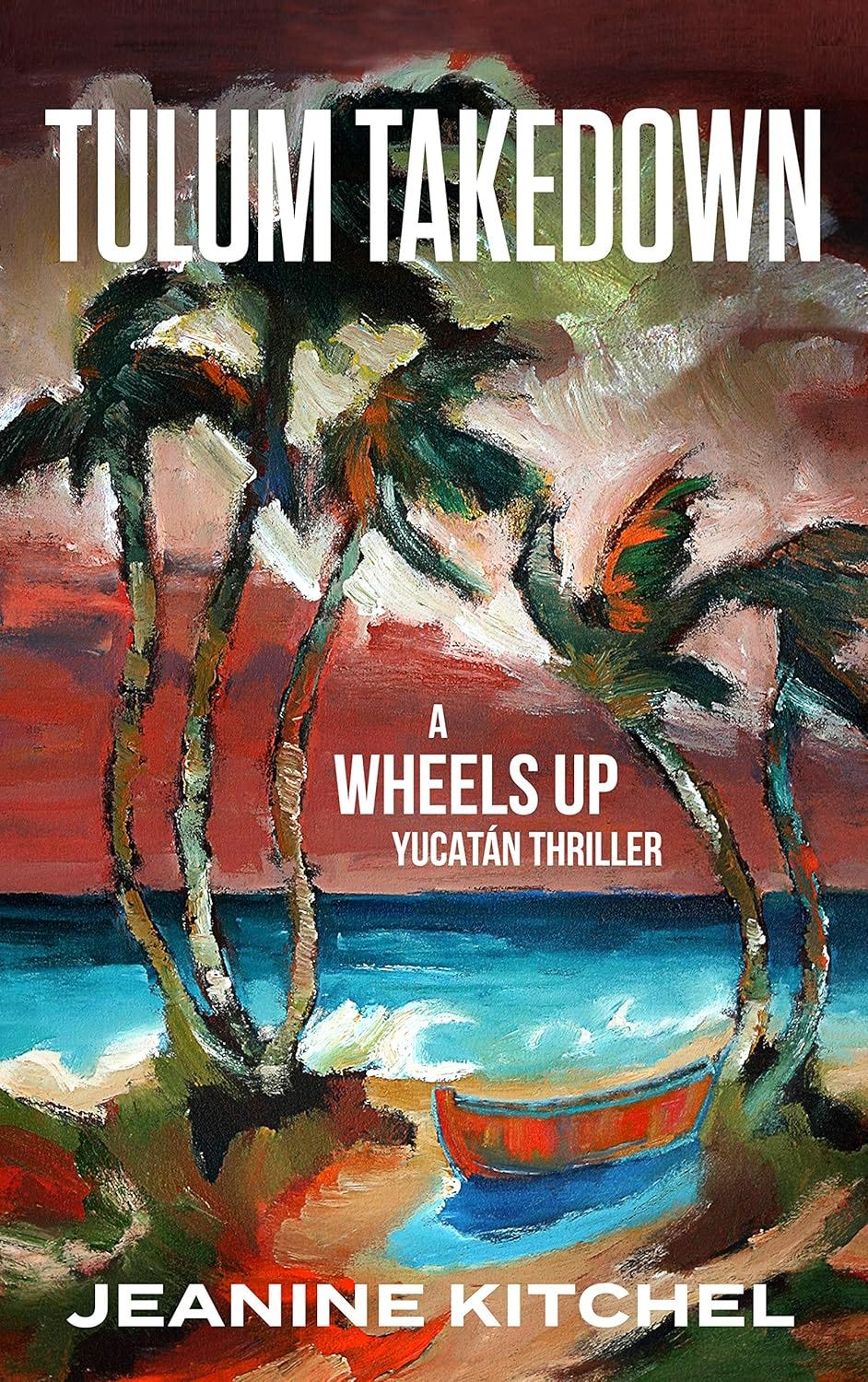
Thanks, Jeanine!
And, just so you readers know that all that work was worth it, the first of her book's glowing reviews mentioned the “immediately hooked reader” and said that Wheels Up has “enough adventure packed into its fast-moving pages to satisfy the most ravenous armchair thrill-seeker. The book begins with a drug-loaded airplane crash into the jungle and never relinquishes its momentum after that.” The review closes with: “Ms. Kitchel gives the avid reader no further chance to breathe as she narrows her exciting plot down to its final, deadly confrontation.”
Another reviewer called Wheels Up “a fast and fun read, reminiscent of sunny South Florida crime novels…It’s not a lightweight story by any means, but there’s a breeziness mixed with intrigue that makes a perfect summer beach read. All in all, Wheels Up is an expertly crafted work of crime fiction—fast-paced when it needs to be, with gripping detail about the Mexican drug trade, and well-drawn characters to match.”
I don’t think those comments about timing and pace would have been quite so complimentary if Jeanine hadn’t gone through the editing process, been able to hear my criticism (and praise) so clearly, and been willing do the hard work to cut the book’s text down, in order to reveal the exciting story at its core.
So, editing is really worth the time and money—because it works.
hasta pronto!
Great post on the value of editing. Writers are often too close to the story to see its flaws and holes. It takes a deft hand to make substantial cuts without losing important elements of the plot. Also, writing and editing are different skills; not everyone can do both.
Thanks for this, Jennifer!